
There are many variations of passages of Lorem Ipsum available, but the majority have suffered alteration in some form, by injected humour, or randomised words which don’t look even slightly believable. If you are going to use a passage of Lorem IpsumAll the Lorem Ipsum generators on the Internet tend to repeat predefined chunks as necessary, making this the first true generator on the Internet.
There are many variations of passages of Lorem Ipsum available, but the majority have suffered alteration in some form, by injected humour, or randomised words which don’t look even slightly believable. If you are going to use a passage of Lorem IpsumAll the Lorem Ipsum generators on the Internet tend to repeat predefined chunks as necessary, making this the first true generator on the Internet.
It is a long established fact that a reader will be distracted
It is a long established fact that a reader will be distracted
It is a long established fact that a reader will be distracted
It is a long established fact that a reader will be distracted
There are many variations of passages of Lorem Ipsum available, but the majority have suffered alteration in some form, by injected humour, or randomised words which don’t look even slightly believable. If you are going to use a passage of Lorem Ipsum, you need to be sure there isn’t anything embarrassing hidden in the middle of text. All the Lorem Ipsum generators on the Internet tend to repeat predefined chunks as necessary, making this the first true generator on the Internet. It uses a dictionary of over 200 Latin words, combined with a handful of model sentence structures, to generate Lorem Ipsum which looks reasonable. The generated Lorem Ipsum is therefore always free from repetition, injected humour, or non-characteristic words etc.

There are many variations of passages of Lorem Ipsum available, but the majority have suffered alteration in some form, by injected humour, or randomised words which don’t look even slightly believable. If you are going to use a passage of Lorem Ipsum, you need to be sure there isn’t anything embarrassing hidden in the middle of text. All the Lorem Ipsum generators on the Internet tend to repeat predefined chunks as necessary, making this the first true generator on the Internet.
There are many variations of passages of Lorem Ipsum available, but the majority have suffered alteration in some form, by injected humour, or randomised words which don’t look even slightly believable. If you are going to use a passage of Lorem Ipsum, you need to be sure there isn’t anything embarrassing hidden in the middle of text. All the Lorem Ipsum generators on the Internet tend to repeat predefined chunks as necessary, making this the first true generator on the Internet.
It uses a dictionary of over 200 Latin words, combined with a handful of model
It uses a dictionary of over 200 Latin words, combined with a handful of model
It uses a dictionary of over 200 Latin words, combined with a handful of model
It uses a dictionary of over 200 Latin words, combined with a handful of model
There are many variations of passages of Lorem Ipsum available, but the majority have suffered alteration in some form, by injected humour, or randomised words which don’t look even slightly believable. If you are going to use a passage of Lorem Ipsum, you need to be sure there isn’t anything embarrassing hidden in the middle of text. All the Lorem Ipsum generators on the Internet tend to repeat predefined chunks as necessary, making this the first true generator on the Internet.

Forest
There are many variations of passages of Lorem Ipsum available, but the majority have suffered alteration in some form, by injected humour, or randomised words which don’t look even slightly believable. If you are going to use a passage of Lorem Ipsum, you need to be sure there isn’t anything embarrassing hidden in the middle of text. All the Lorem Ipsum generators on the Internet tend to repeat predefined chunks as necessary, making this the first true generator on the Internet. It uses a dictionary of over 200 Latin words, combined with a handful of model sentence structures, to generate Lorem Ipsum which looks reasonable. The generated
There are many variations of passages of Lorem Ipsum available, but the majority have suffered alteration in some form, by injected humour, or randomised words which don’t look even slightly believable. If you are going to use a passage of Lorem Ipsum, you need to be sure there isn’t anything embarrassing hidden in the middle of text. All the Lorem Ipsum generators on the Internet tend to repeat predefined chunks as necessary, making this the first true generator on the Internet. It uses a dictionary of over 200 Latin words, combined with a handful of model sentence structures, to generate Lorem Ipsum which looks reasonable. The generated
It uses a dictionary of over 200 Latin words, combined with a handful of model
It uses a dictionary of over 200 Latin words, combined with a handful of model
It uses a dictionary of over 200 Latin words, combined with a handful of model
It uses a dictionary of over 200 Latin words, combined with a handful of model

Lifestyle
Contrary to popular belief, Lorem Ipsum is not simply random text. It has roots in a piece of classical Latin literature from 45 BC, making it over 2000 years old. Richard McClintock, a Latin professor at Hampden-Sydney College in Virginia, looked up one of the more obscure Latin words, consectetur, from a Lorem Ipsum passage, and going through the cites of the word in classical literature, discovered the undoubtable source. Lorem Ipsum comes from sections 1.10.32 and 1.10.33 of “de Finibus Bonorum et Malorum” (The Extremes of Good and Evil) by Cicero, written in 45 BC. This book is a treatise on the theory of ethics, very popular during the Renaissance.
Contrary to popular belief, Lorem Ipsum is not simply random text. It has roots in a piece of classical Latin literature from 45 BC, making it over 2000 years old. Richard McClintock, a Latin professor at Hampden-Sydney College in Virginia, looked up one of the more obscure Latin words, consectetur, from a Lorem Ipsum passage, and going through the cites of the word in classical literature, discovered the undoubtable source. Lorem Ipsum comes from sections 1.10.32 and 1.10.33 of “de Finibus Bonorum et Malorum” (The Extremes of Good and Evil) by Cicero, written in 45 BC. This book is a treatise on the theory of ethics, very popular during the Renaissance.
It uses a dictionary of over 200 Latin words, combined with a handful of model
It uses a dictionary of over 200 Latin words, combined with a handful of model
It uses a dictionary of over 200 Latin words, combined with a handful of model
It uses a dictionary of over 200 Latin words, combined with a handful of model
Welcome to WordPress. This is your first post. Edit or delete it, then start writing!

The shift from static mockups to component-based design has fundamentally changed how creative teams work. Design systems aren’t just style guides — they’re living ecosystems of reusable components, design tokens, and shared principles that scale across products and teams.
From Pixels to Principles
Traditional design workflows produced beautiful but fragile deliverables. A pixel-perfect Photoshop comp couldn’t account for responsive breakpoints, dynamic content, or the thousand edge cases that emerge in production. Design systems solve this by encoding decisions — spacing scales, color tokens, interaction patterns — into reusable building blocks.
Design Tokens: The Foundation
At the heart of every design system are tokens: named values for colors, spacing, typography, shadows, and motion. Instead of hardcoding #EA580C throughout your codebase, you reference a token like –color-primary. When your brand evolves, you update the token once and the change propagates everywhere.
A design system is a product, not a project. It needs to be maintained, evolved, and supported over time.
Nathan Curtis
The ROI of Consistency
Teams that adopt design systems report measurable improvements: faster development cycles, fewer design-to-code inconsistencies, easier onboarding for new team members, and a more cohesive user experience. The upfront investment pays for itself within the first few projects.
Whether you’re a solo designer or part of a large organization, thinking in systems rather than screens will elevate your work and make it more resilient to the inevitable changes ahead.

The shift from static mockups to component-based design has fundamentally changed how creative teams work. Design systems aren’t just style guides — they’re living ecosystems of reusable components, design tokens, and shared principles that scale across products and teams.
From Pixels to Principles
Traditional design workflows produced beautiful but fragile deliverables. A pixel-perfect Photoshop comp couldn’t account for responsive breakpoints, dynamic content, or the thousand edge cases that emerge in production. Design systems solve this by encoding decisions — spacing scales, color tokens, interaction patterns — into reusable building blocks.
Design Tokens: The Foundation
At the heart of every design system are tokens: named values for colors, spacing, typography, shadows, and motion. Instead of hardcoding #EA580C throughout your codebase, you reference a token like –color-primary. When your brand evolves, you update the token once and the change propagates everywhere.
A design system is a product, not a project. It needs to be maintained, evolved, and supported over time.
Nathan Curtis
The ROI of Consistency
Teams that adopt design systems report measurable improvements: faster development cycles, fewer design-to-code inconsistencies, easier onboarding for new team members, and a more cohesive user experience. The upfront investment pays for itself within the first few projects.
Whether you’re a solo designer or part of a large organization, thinking in systems rather than screens will elevate your work and make it more resilient to the inevitable changes ahead.

The shift from static mockups to component-based design has fundamentally changed how creative teams work. Design systems aren’t just style guides — they’re living ecosystems of reusable components, design tokens, and shared principles that scale across products and teams.
From Pixels to Principles
Traditional design workflows produced beautiful but fragile deliverables. A pixel-perfect Photoshop comp couldn’t account for responsive breakpoints, dynamic content, or the thousand edge cases that emerge in production. Design systems solve this by encoding decisions — spacing scales, color tokens, interaction patterns — into reusable building blocks.
Design Tokens: The Foundation
At the heart of every design system are tokens: named values for colors, spacing, typography, shadows, and motion. Instead of hardcoding #EA580C throughout your codebase, you reference a token like –color-primary. When your brand evolves, you update the token once and the change propagates everywhere.
A design system is a product, not a project. It needs to be maintained, evolved, and supported over time.
Nathan Curtis
The ROI of Consistency
Teams that adopt design systems report measurable improvements: faster development cycles, fewer design-to-code inconsistencies, easier onboarding for new team members, and a more cohesive user experience. The upfront investment pays for itself within the first few projects.
Whether you’re a solo designer or part of a large organization, thinking in systems rather than screens will elevate your work and make it more resilient to the inevitable changes ahead.
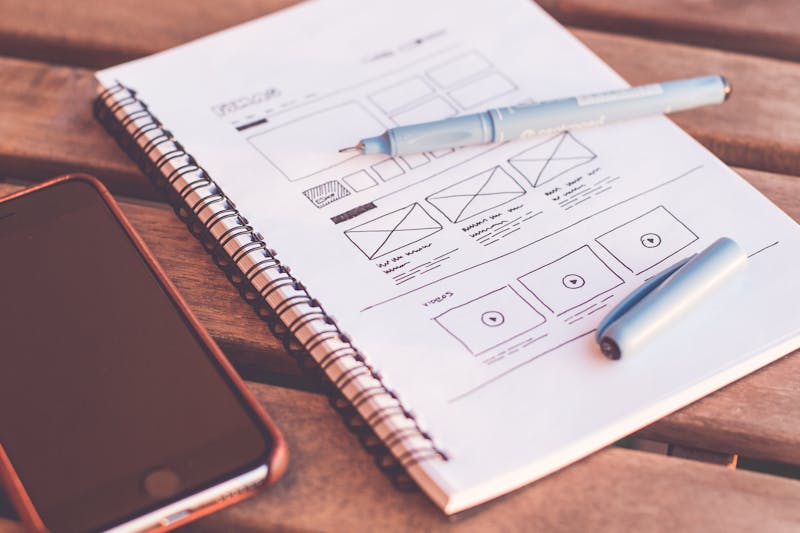
The shift from static mockups to component-based design has fundamentally changed how creative teams work. Design systems aren’t just style guides — they’re living ecosystems of reusable components, design tokens, and shared principles that scale across products and teams.
From Pixels to Principles
Traditional design workflows produced beautiful but fragile deliverables. A pixel-perfect Photoshop comp couldn’t account for responsive breakpoints, dynamic content, or the thousand edge cases that emerge in production. Design systems solve this by encoding decisions — spacing scales, color tokens, interaction patterns — into reusable building blocks.
Design Tokens: The Foundation
At the heart of every design system are tokens: named values for colors, spacing, typography, shadows, and motion. Instead of hardcoding #EA580C throughout your codebase, you reference a token like –color-primary. When your brand evolves, you update the token once and the change propagates everywhere.
A design system is a product, not a project. It needs to be maintained, evolved, and supported over time.
Nathan Curtis
The ROI of Consistency
Teams that adopt design systems report measurable improvements: faster development cycles, fewer design-to-code inconsistencies, easier onboarding for new team members, and a more cohesive user experience. The upfront investment pays for itself within the first few projects.
Whether you’re a solo designer or part of a large organization, thinking in systems rather than screens will elevate your work and make it more resilient to the inevitable changes ahead.

The shift from static mockups to component-based design has fundamentally changed how creative teams work. Design systems aren’t just style guides — they’re living ecosystems of reusable components, design tokens, and shared principles that scale across products and teams.
From Pixels to Principles
Traditional design workflows produced beautiful but fragile deliverables. A pixel-perfect Photoshop comp couldn’t account for responsive breakpoints, dynamic content, or the thousand edge cases that emerge in production. Design systems solve this by encoding decisions — spacing scales, color tokens, interaction patterns — into reusable building blocks.
Design Tokens: The Foundation
At the heart of every design system are tokens: named values for colors, spacing, typography, shadows, and motion. Instead of hardcoding #EA580C throughout your codebase, you reference a token like –color-primary. When your brand evolves, you update the token once and the change propagates everywhere.
A design system is a product, not a project. It needs to be maintained, evolved, and supported over time.
Nathan Curtis
The ROI of Consistency
Teams that adopt design systems report measurable improvements: faster development cycles, fewer design-to-code inconsistencies, easier onboarding for new team members, and a more cohesive user experience. The upfront investment pays for itself within the first few projects.
Whether you’re a solo designer or part of a large organization, thinking in systems rather than screens will elevate your work and make it more resilient to the inevitable changes ahead.